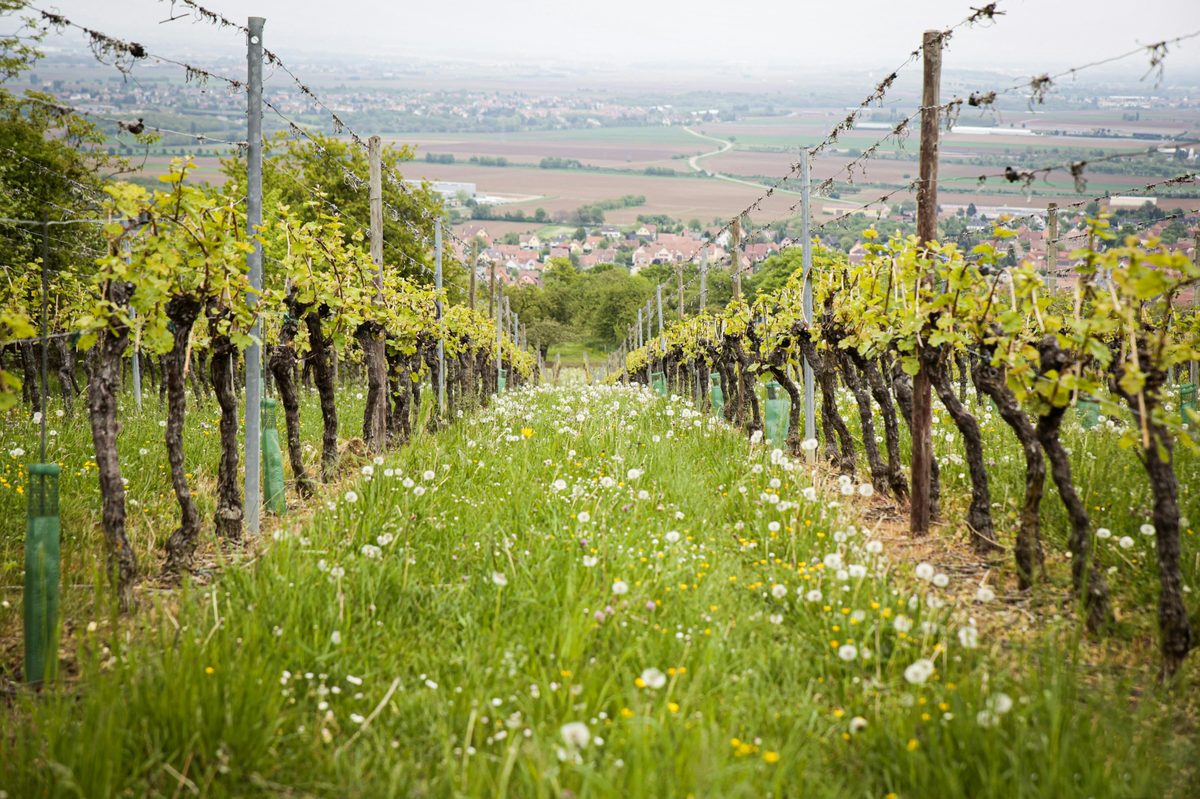
Terroir is the French word that forms the basis of all European wine philosophy. It covers everything unique about a specific place that affects the wine's character — soil, climate, topography, microclimate and human tradition.
It is the reason why two wines from the same Pinot Noir grape, grown 500 meters apart in Bourgogne, can taste markedly different. It is not the grapes' fault — it is the terroir's.
Simply explained: Terroir is the sum of everything that makes a particular place unique for wine growing. It is the reason why a Chablis tastes different from a Meursault — even though both are Chardonnay from Bourgogne.
The four elements of terroir
1. Soil
The soil composition has enormous influence on the wine. Limestone provides minerality and acidity (Chablis, Champagne). Slate retains heat and gives the characteristic mineral nuances in Mosel-Riesling. Gravel drains water effectively and forces roots deep down (Médoc in Bordeaux).
2. Climate and microclimate
Temperature, precipitation and sunshine determine when grapes ripen and what aromas they develop. Cool climates provide high acidity and delicate aromas. Warm climates produce ripe, fruity wines with high alcohol. Even within a region, microclimate — e.g. south-facing slopes — can make an enormous difference.
3. Topography
Altitude, slope and orientation toward the sun affect temperature and sunshine. The best Mosel vineyards are south-facing slopes that maximize sunshine in the cool German climate. In warm regions, high-altitude vineyards with cooler temperatures are often the best.
4. The human hand
The French traditionally also include the winemaker's tradition and knowhow as part of terroir. It is the reason why a great chateau with centuries of experience can express the terroir better than a newly established vineyard on the same soil.
Terroir in practice
Understanding of terroir is the reason why French wines are named after place (Bordeaux, Bourgogne, Chablis) rather than grape as in the overseas world (Chardonnay, Cabernet Sauvignon). The French believe that place is more important than grape.
It is also the reason why the very best wine from a top parcel — e.g. Romanée-Conti in Bourgogne — can cost hundreds of thousands of kroner. The terroir is unique and cannot be copied.
Do you want to understand more about wine?
Ask the AI assistant about any wine term or region — it explains it simply.
Try the AI assistant →