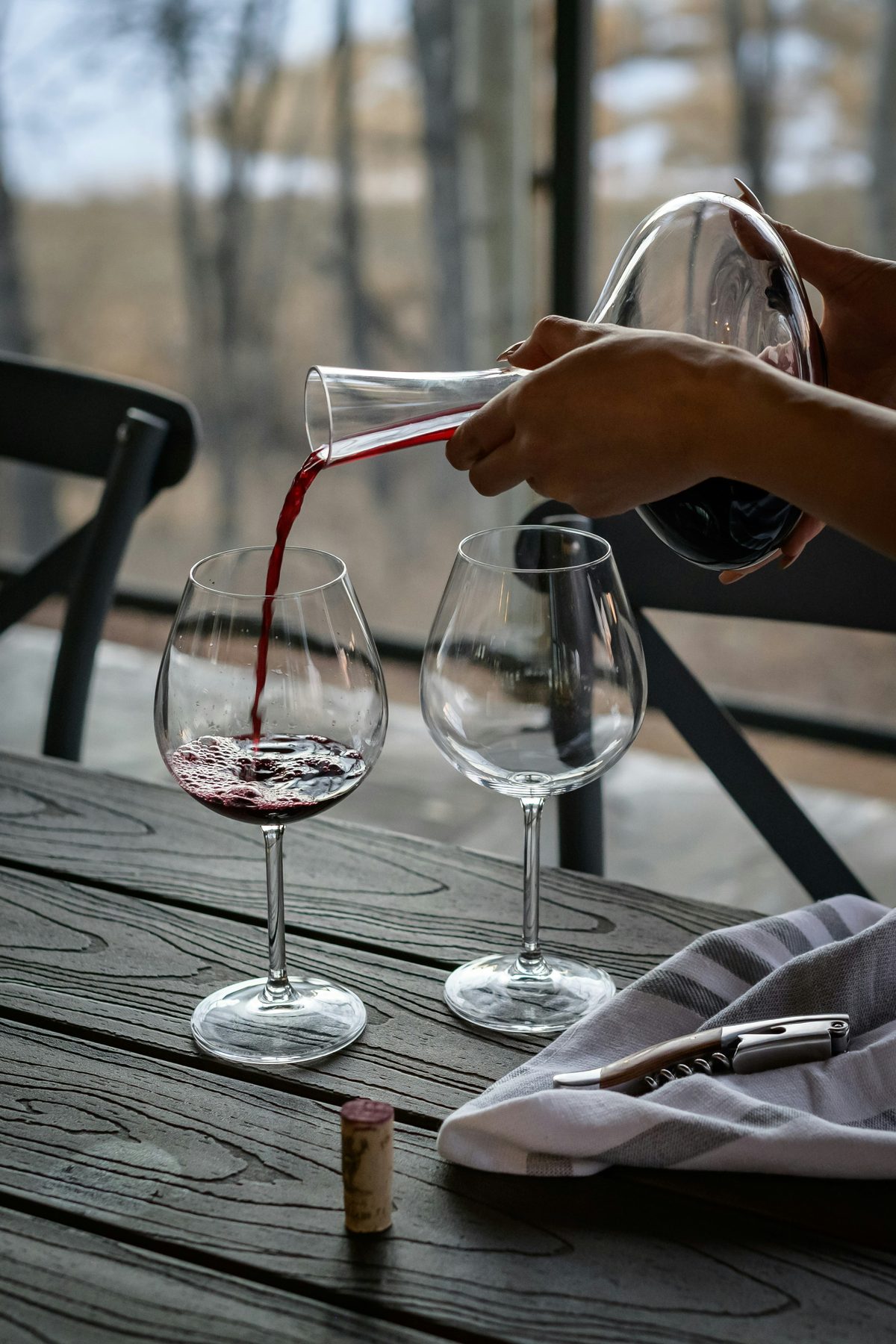
Decanting simply means pouring wine from the bottle into a decanter. It sounds trivial — but it can actually transform a wine fundamentally. The air that comes into contact with the wine opens the aromas, softens the tannins and removes any sediment.
It is one of the cheapest and most effective ways to improve your wine experience — and you don't even need an expensive decanter. A simple glass pitcher works fine.
Quick rule of thumb: Powerful, young red wines with lots of tannin (Cabernet Sauvignon, Barolo, Syrah) — aerate 30-60 minutes. Light red wines and white wines — no aeration necessary. Old wines with sediment — decant carefully.
Why does aeration work?
When wine meets oxygen, two things happen:
- The tannins are softened — the oxygen reacts with the harsh tannin molecules and makes them softer and more silky. This is particularly evident in young, powerful red wines.
- The aromas open up — many wines are "closed" straight from the bottle. Aeration releases the bound aromas and gives a more complex and open fragrance.
Which wines should be aerated?
Aerate these wines:
- Young, powerful red wines: Cabernet Sauvignon, Barolo, Syrah/Shiraz
- Bordeaux under 10 years. See guide to Bordeaux.
- Rioja Reserva and Gran Reserva. See guide to Rioja.
Skip aeration for:
- Light red wines with low tannin: Pinot Noir, Beaujolais
- White wines — most white wines don't need aeration
- Old wines over 15-20 years — they are fragile and can collapse with too long aeration
Sediment — what is it and is it dangerous?
Sediment in red wine is precipitated tannin and color particles that settle in the bottle over time. It is completely natural and not harmful — but it tastes bitter and gritty if it gets in the glass.
Stand the bottle upright for 24 hours before opening, the sediment will settle at the bottom. Then decant slowly and stop when you see the sediment approaching the neck.
Don't have a decanter?
No problem — pour the wine into a large glass and let it sit for 20-30 minutes. It works almost as well as a decanter for most wines. Alternatively, you can also just pour the wine and let it sit in the glass — the aromas open up gradually as you drink.
Unsure if your wine needs airing?
Describe the wine or ask directly — the AI assistant tells you exactly what to do.
Try the AI assistant →