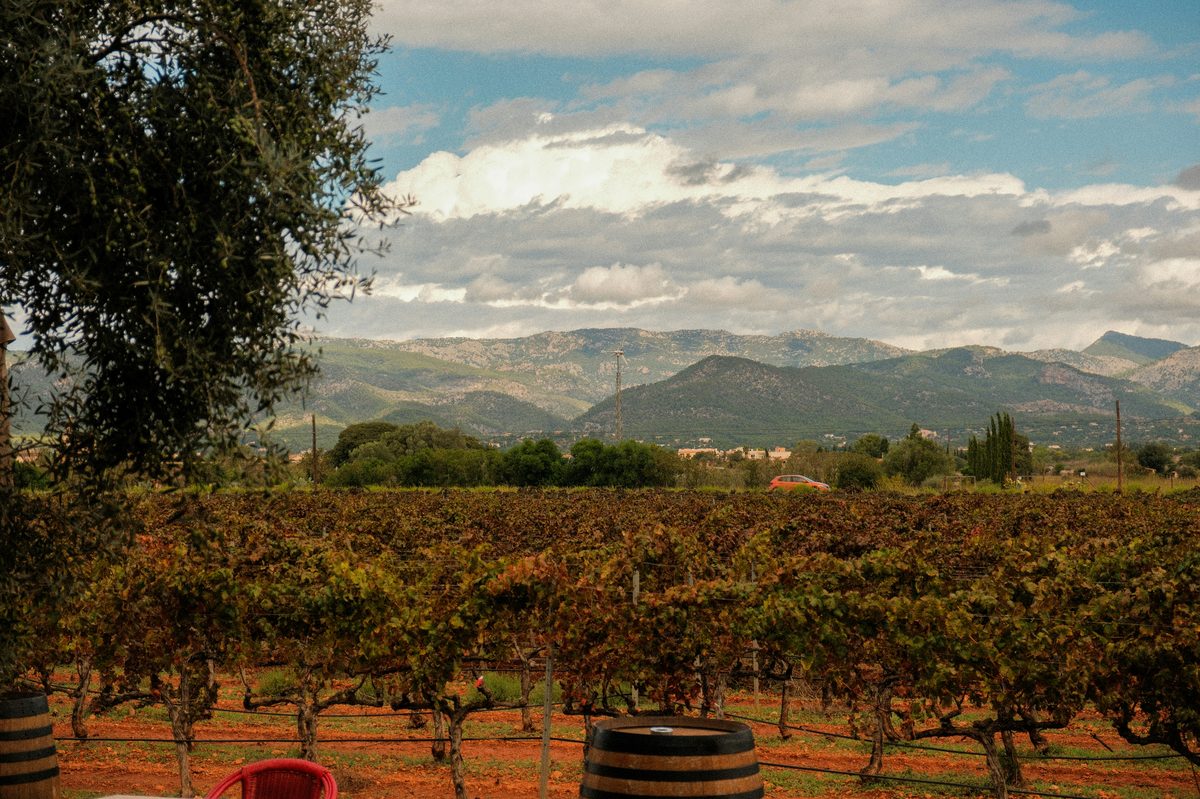
Spain is the world's largest wine country measured by vineyard area — and yet it is still undervalued. While France and Italy have received the most attention, Spain harbors a wealth of unique grape varieties and regions that can compete with the very best in the world.
From the cool, Atlantic-influenced Rías Baixas in the northwest to the sun-scorched plains of La Mancha, Spain is enormously varied — in climate, terrain and wine style.
Spain's wine philosophy: Oak aging is central. The Spanish classification system — Joven, Crianza, Reserva and Gran Reserva — is based on aging time in oak barrels and bottles, not on geandraphic hierarchy as in France.
Spain's most important wine regions
Tempranillo — Spain's national grape
Tempranillo is Spain's most important red wine grape and thrives best in the high-altitude, continentally influenced regions. In Rioja it produces elegant wines with red berries, vanilla and tobacco from the oak aging. In Ribera del Duero the style is darker and more powerful with intense plum and dark chocolate.
The clever thing about Tempranillo is the classification system: a Crianza for 90-130 kr already has two years behind it and is ready to drink. A Reserva for 150-250 kr is even more complex and well-integrated.
Albariño — the North's fresh pearl
From the green, rainy region of Galicia in the northwest comes Albariño — a white wine grape with a freshness and aromatic richness that reminds one of Riesling, but with its own distinct character. The wines smell of peach, citrus and white flowers, and the acidity makes them perfect for shellfish and light fish.
A good Albariño from Rías Baixas for 100-160 kr is one of the most convincing white wines for the price in Europe.
Priorat — the extreme
Priorat in Catalonia is for those who want something different. On almost vertical slopes with the characteristic black slate soil (llicorella) are grown Garnacha and Cariñena in extremely low yields. The result is wines with a concentration and minerality rarely experienced elsewhere.
Best introduction to Spanish wine: Start with a Rioja Crianza (red, 90-130 kr), an Albariño from Rías Baixas (white, 100-150 kr) and a Fino Sherry (for tapas, 80-120 kr). Three vastly different sides of Spain.
Find a specific Spanish wine
Describe your dish, your taste and your budget — the AI assistant finds the perfect Spanish wine.
Try the AI assistant →