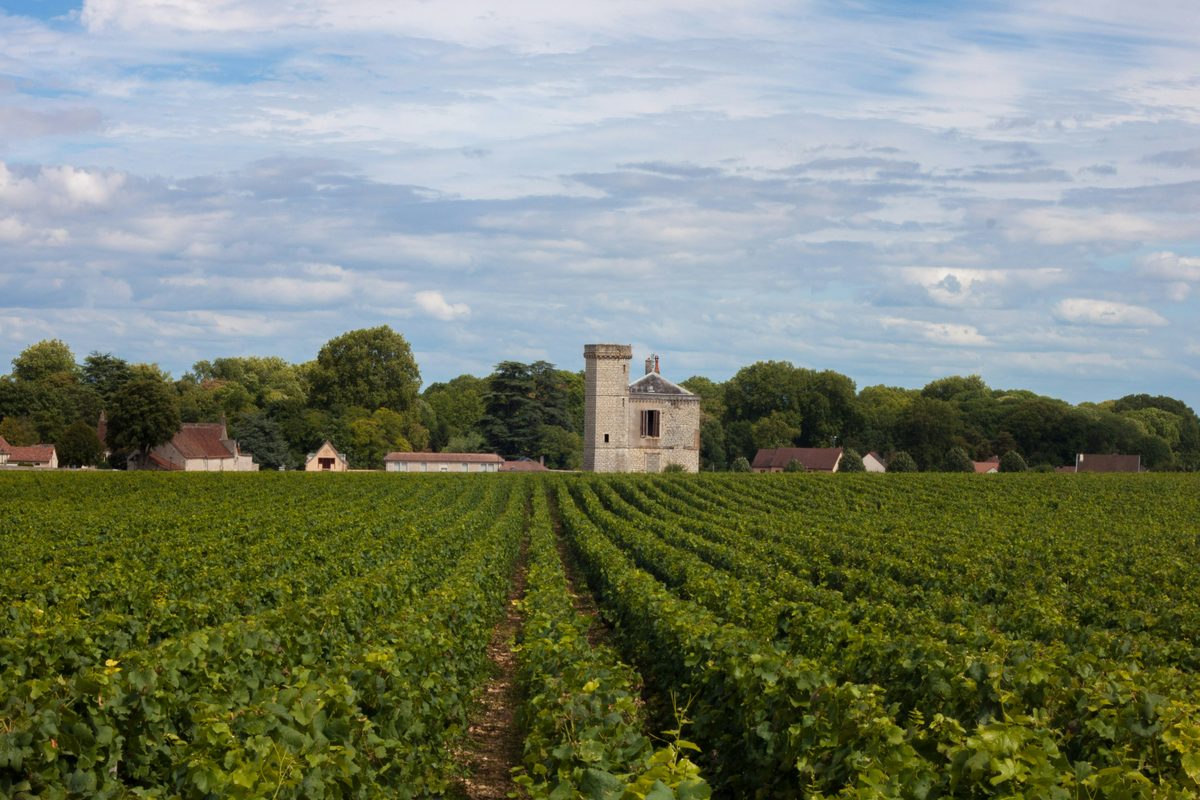
Burgundy is not just a wine region — it is a philosophical statement. While Bordeaux blends grapes and builds its reputation on famous châteaux, Burgundy is about one place, one grape and one vintage. Nothing more. And it is precisely that purity which makes Burgundy the world's most sought-after wine.
Two grapes dominate entirely: Pinot Noir for red wine and Chardonnay for white wine. The wines do not merely reflect the character of the grape — they reflect the exact piece of land in which they grow. This is terroir in its purest form.
In short: Burgundy = Pinot Noir + Chardonnay + terroir. Quality is determined by which vineyard the grapes come from — not who made the wine. The more specific the plot, the higher the prestige and price.
Burgundy's quality system
Burgundy uses a unique system based on climats — specific plots with legally defined boundaries. From broadest to narrowest:
Bourgogne AOC
Grapes from across the entire region. Bourgogne Rouge (Pinot Noir) and Bourgogne Blanc (Chardonnay). A great entry point to the style from around €15–30.
E.g. Gevrey-Chambertin, Meursault
Grapes from a single specific village. More distinctive character and greater complexity. Typically €30–70.
Around 640 named plots
Named vineyard plots with special characteristics. The plot name appears on the label. From €60–120 and upwards.
Only 33 plots in all of Burgundy
The absolute pinnacle. Chambertin, Musigny, Romanée-Conti. From €150 to many thousands.
The most important sub-regions
Red Burgundy — Pinot Noir
Burgundy's red wines are made from Pinot Noir alone — and they are anything but heavy. It is a grape that speaks of elegance, transparency and nuance. A good Bourgogne Rouge smells of cherry, strawberry, violet and smoked meat. With age, notes of truffle, forest floor and leather emerge.
The finest wines from Côte de Nuits — Gevrey-Chambertin, Chambolle-Musigny, Vosne-Romanée — are among the world's most complex wines. Domaines such as Leroy, Rousseau, Mugnier and Romanée-Conti (DRC) are legendary. See our guide to Pinot Noir.
White Burgundy — Chardonnay
Burgundy's white wines set the global benchmark for Chardonnay. Meursault is rich, buttery and nutty. Puligny-Montrachet is more precise and mineral. Chablis is sharp and saline. All are Chardonnay — yet they taste radically different because terroir dictates everything.
Tip: Start with a Mâcon-Villages or Bourgogne Blanc from a good producer (Leflaive, Jadot, Drouhin) for around €20–30. This gives you an authentic feel for Chardonnay as Burgundy defines it — without paying €150 for a Premier Cru.
What to pair with Burgundy?
- Red Burgundy — lamb, duck, chicken, mushroom dishes, mild cheese and truffle. See our guide to wine with chicken and wine with lamb.
- White Burgundy / Meursault — fish, lobster, scallops, rich salmon and soft cheeses.
- Chablis — oysters, mussels, prawns and delicate white fish. A classic match. See our guide to wine with fish.
- Grand Cru — serve on its own or with very simple dishes. Let the wine speak.
When to drink Burgundy?
Burgundy is one of the wines that benefits most from ageing — yet many are drunk too young. As a general rule:
- Regional and Village — best 3–8 years after harvest
- Premier Cru — best 8–15 years after harvest
- Grand Cru — can easily hold 20–30+ years
Young Burgundy is often closed and tight. Give it time — or decant for 30–60 minutes.
Find a specific Burgundy for your dish and budget
Describe what you're eating, your taste preferences and your budget — the AI assistant will recommend a specific Burgundy.
Try the AI assistant →